The Hidden Math Behind TV Height: Why Eye-Level Isn't Always the Right Answer
April 28, 2026
Mounting a television seems straightforward: place the screen at eye level and enjoy comfortable viewing. This widely accepted rule has guided countless installations, shaping how living rooms, media spaces, and bedrooms are arranged. However, the assumption that eye-level placement is always optimal overlooks a more complex reality. The human visual system, seating posture, screen size, and viewing distance all interact in subtle ways that influence comfort and picture quality. As screen sizes grow larger and home entertainment setups become more sophisticated, relying solely on eye-level positioning can lead to unintended strain, poor viewing angles, and diminished immersion.
Understanding the hidden math behind TV height reveals why a one-size-fits-all approach rarely works. Variables such as vertical viewing angle, ergonomic posture, and field of vision introduce measurable factors that must be considered for an optimal setup. Whether designing a dedicated home theater or arranging a living room display, these principles play a critical role in achieving both comfort and performance. By moving beyond simplified rules and embracing a more calculated approach, homeowners and professionals can create viewing environments that align with both human physiology and modern display technology.
1. The Myth of Eye-Level Viewing
Why the Rule Became Popular
The concept of placing a TV at eye level originates from early ergonomic guidelines used for computer monitors. When screens were smaller, and users sat upright at desks, aligning the center of the display with eye height reduced neck strain. This principle gradually carried over into television placement without accounting for differences in viewing environments, such as reclining seating and larger displays.
Where the Rule Falls Short
In modern living spaces, viewers rarely sit perfectly upright. Sofas, recliners, and lounge chairs naturally tilt the body backward, shifting the viewer’s gaze slightly upward. Mounting a TV strictly at eye level in these scenarios often results in the screen appearing too low, forcing viewers to angle their heads downward. Over time, this can cause discomfort in the neck and upper back.
Real-World Example
Consider a family room where the seating position reclines at a 10–15 degree angle. If the TV is mounted with its center exactly at seated eye level, the viewer’s natural line of sight will fall above the screen’s midpoint. This mismatch creates a subtle but constant strain, especially during extended viewing sessions.
2. Understanding Viewing Angles and Human Vision
The Science of Vertical Viewing Angles
Human vision is most comfortable when looking slightly downward rather than straight ahead or upward. Studies in ergonomics suggest that a downward viewing angle of approximately 10 to 20 degrees is ideal for reducing eye and neck strain. This is why smartphones, books, and laptops are typically positioned below eye level.
How TV Height Affects Picture Quality
Modern televisions, especially LED and OLED panels, have optimal viewing zones. Viewing from extreme vertical angles can reduce brightness, distort colors, and diminish contrast. Mounting a TV too high forces viewers to look upward, pushing the screen outside its optimal viewing range.
Field of Vision and Immersion
A properly positioned TV should align with the viewer’s natural field of vision. When the screen occupies a central portion of this field, it enhances immersion and reduces the need for constant eye movement. If the TV is too high, the viewer must repeatedly adjust their gaze, breaking immersion and increasing fatigue.
Practical Insight
Instead of focusing solely on eye level, consider the center of the screen relative to the viewer’s relaxed line of sight. This approach ensures both ergonomic comfort and visual clarity.
3. The Role of Screen Size and Distance
Larger Screens Change the Equation
As televisions grow in size, their height increases significantly. A 75-inch TV, for example, has a much taller screen than a 40-inch model. If both are mounted with their centers at eye level, the larger screen will extend far above the viewer’s natural line of sight, requiring upward viewing.
Distance Determines Comfort
Viewing distance plays a critical role in determining the appropriate TV height. The farther the viewer sits, the smaller the vertical angle required to see the entire screen comfortably. Conversely, closer seating positions demand more precise height placement to avoid excessive head movement.
Example Scenario
In a compact living room where the seating distance is approximately 8 feet, mounting a large TV too high can create a steep viewing angle. This forces the viewer to tilt their head upward, leading to discomfort during long viewing sessions. Lowering the TV slightly ensures the entire screen remains within a comfortable visual range.
4. Furniture, Posture, and Real-Life Usage
Seating Position Matters
Different seating types significantly impact viewing angles. Recliners, sectionals, and lounge chairs all alter the viewer’s posture, shifting the natural line of sight. A TV height that works for a dining chair will not necessarily work for a reclined sofa.
Multi-User Environments
In many households, multiple people use the same TV from different seating positions. This creates a challenge: optimizing height for one viewer may not suit another. In such cases, the goal is to find a balanced height that accommodates the majority of viewing positions.
Real-World Application
In a family living room, some viewers may sit upright while others recline. Mounting the TV slightly higher than traditional eye level can create a compromise that works for both positions. However, raising it too much introduces the risk of neck strain for upright viewers.
Room Layout Constraints
Fireplaces, windows, and wall structures often dictate where a TV can be mounted. While these constraints are unavoidable, understanding the underlying math allows for better adjustments, such as tilting mounts or repositioning seating.
Key Insight
TV height should be determined by how the space is actually used, not by generic guidelines. Observing real-life behavior provides valuable data for making informed decisions.
5. Calculating the Ideal TV Height
A Practical Formula
A commonly used guideline involves calculating the ideal viewing height based on eye level and screen size. Instead of aligning the center of the TV with eye level, aim to position the lower third of the screen near the viewer’s eye line. This naturally accommodates a slight downward viewing angle.
Step-by-Step Approach
- Measure the viewer’s eye height when seated.
- Determine the height of the TV screen.
- Position the screen so that the eye level aligns with the lower third of the display.
- Adjust slightly based on seating angle and personal comfort.
Example Calculation
If the seated eye height is 42 inches and the TV height is 30 inches, placing the center of the TV at 42 inches may not be ideal. Instead, positioning the lower third of the screen around 42 inches ensures a more natural viewing angle.
Flexibility Over Precision
While calculations provide a strong starting point, individual preferences and room dynamics should guide final adjustments. Small changes of even a few inches can significantly improve comfort.
Expert Tip
Test different heights before final installation. Temporary setups or adjustable mounts allow viewers to experience various positions and identify what feels most natural.
6. Common Mistakes and How to Avoid Them
Mounting Too High
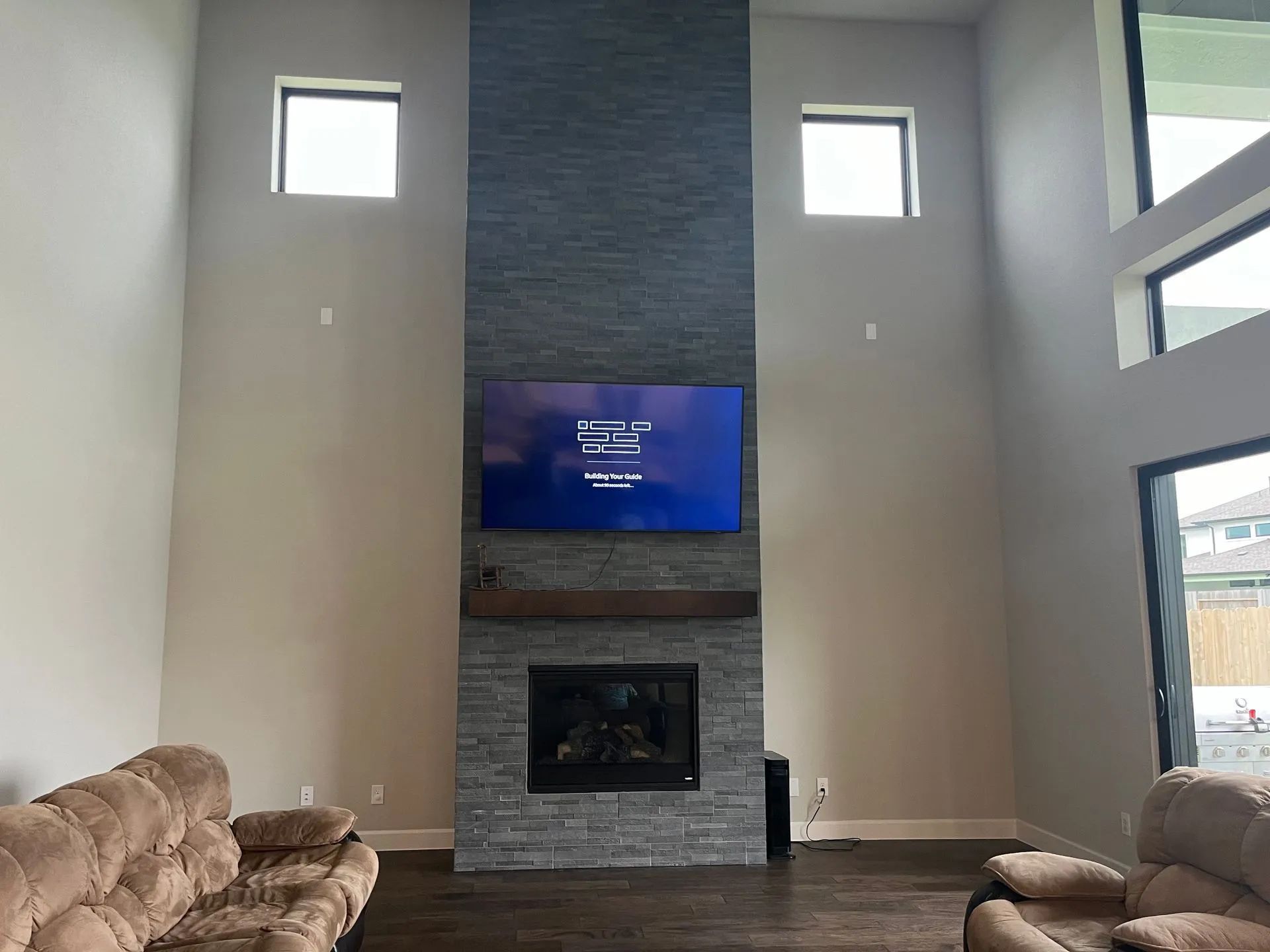
One of the most common errors is placing the TV too high, often above fireplaces. While visually appealing, this position forces viewers to look upward, leading to discomfort and reduced picture quality.
Ignoring Seating Dynamics
Failing to consider how people actually sit and watch TV can result in poor placement. Always account for posture, seating angle, and usage patterns.
Overlooking Screen Glare
Height also affects how light interacts with the screen. A poorly positioned TV may catch reflections from windows or lights, reducing visibility. Adjusting height can help minimize glare.
Prioritizing Aesthetics Over Function
While design is important, functionality should take precedence. A perfectly centered TV may look appealing, but fail to deliver a comfortable viewing experience.
Best Practices
- Prioritize ergonomic comfort over rigid rules.
- Use adjustable mounts for flexibility.
- Test viewing angles from multiple seating positions.
- Consider both daytime and nighttime lighting conditions.
Final Insight
Avoiding these common mistakes ensures that the TV setup supports both comfort and performance, creating a more enjoyable viewing experience for everyone.
Professional AV Specialists Ensuring Perfect Viewing Experience
The placement of a television is far more complex than aligning it with eye level. By understanding the interplay between viewing angles, screen size, distance, and human posture, it becomes clear that optimal TV height is a calculated decision rather than a fixed rule. A slight downward viewing angle, balanced screen positioning, and consideration of real-world usage all contribute to a more comfortable and immersive experience. Ignoring these factors can lead to unnecessary strain and reduced visual quality, especially as modern displays continue to grow in size and sophistication. Applying these principles ensures that every viewing environment is tailored to both the space and its users.
For homeowners seeking expert guidance, Hangman AV
stands as a trusted authority in home cinema installation. Based in Houston, Texas, with 18
years of hands-on experience, we specialize in creating tailored viewing environments that balance design, comfort, and performance. Our approach goes beyond basic mounting by incorporating precise measurements, ergonomic principles, and
advanced installation techniques
to ensure every screen is positioned for optimal viewing. We understand that every space is unique, which is why we carefully assess room layout, seating arrangements, and lighting conditions before recommending solutions. From standard living room setups to fully customized home theaters, our expertise ensures a seamless integration of technology and design. By focusing on both functionality and aesthetics, we help transform everyday viewing into a refined, immersive experience that reflects professional craftsmanship and long-term reliability.