Fixed, Tilting, or Full-Motion: The TV Wall Mount Types That Actually Match How a Room Gets Used
September 14, 2026
QUICK ANSWER: The right wall mount depends on where the seating sits relative to the screen, not on the television itself. A fixed mount holds the screen flat and close to the wall, which works when a couch sits directly in front of the TV at roughly eye level. A tilting mount angles the screen downward, useful when a TV sits above eye level or needs to shed glare from windows and overhead lighting. A full-motion, or articulating, mount extends, swivels, and tilts, which matters most in open floor plans, kitchens, or any room with more than one seating area. Weight capacity and VESA bolt-pattern compatibility matter as much as the mount type itself, and Houston's mix of drywall, brick, and masonry construction changes which hardware will actually anchor securely.
A homeowner in Katy spent an afternoon rearranging a sectional sofa three separate times, trying to find an angle where the new television stopped washing out under the recessed lighting in the family room. The TV itself was fine, brand new, properly calibrated.
The mount was the problem. It was a basic flat bracket, picked up because it was the first one on the shelf, holding the screen rigid at a fixed angle that happened to catch every can light in the ceiling dead-on. Moving the furniture around fixed nothing, because the seating was never the issue. The mount couldn't tilt, couldn't turn, and it had already been drilled into the wall.
We've walked into more than one Houston living room where this exact scene played out. A mount is a small, unglamorous piece of hardware, but it decides more about how a television actually gets watched than the screen resolution or the size of the panel does. Picking the wrong type rarely announces itself as an installation failure. It shows up weeks later, as glare nobody planned for, a neck angle that gets uncomfortable halfway through a long game, or a screen that looks great from the couch and unusable from the kitchen island ten feet away.
What a Wall Mount Is Actually Engineered to Do
A wall mount is a load-bearing bracket system built from two connected parts: a wall plate anchored into the wall's structure, and a TV plate bolted to the back of the television using a standardized hole pattern called VESA, set by the Video Electronics Standards Association. VESA patterns range from small groupings like 75x75mm on compact screens up to 400x400mm or larger on big living-room televisions, which is why the number that actually matters when comparing mounts is the bolt-pattern range and the maximum listed weight rating, not the mount's brand or finish.
A mount's stated weight rating includes an engineering margin. But that margin shrinks fast the further the arm extends away from the wall. Extension creates torque, and that torque multiplies the effective load placed on the mount's joints and on the anchors holding it to the wall. That's a big part of why a fixed mount can often carry more weight safely than a full-motion mount of similar size: the fixed mount keeps the load close to the wall, while an articulating arm has to resist a constant twisting force that grows with every inch of reach. That physics, more than the television itself, is the real reason weight, screen size, and reach distance all get checked before a mount type gets recommended.
The Three Mount Types and What Each One Actually Solves
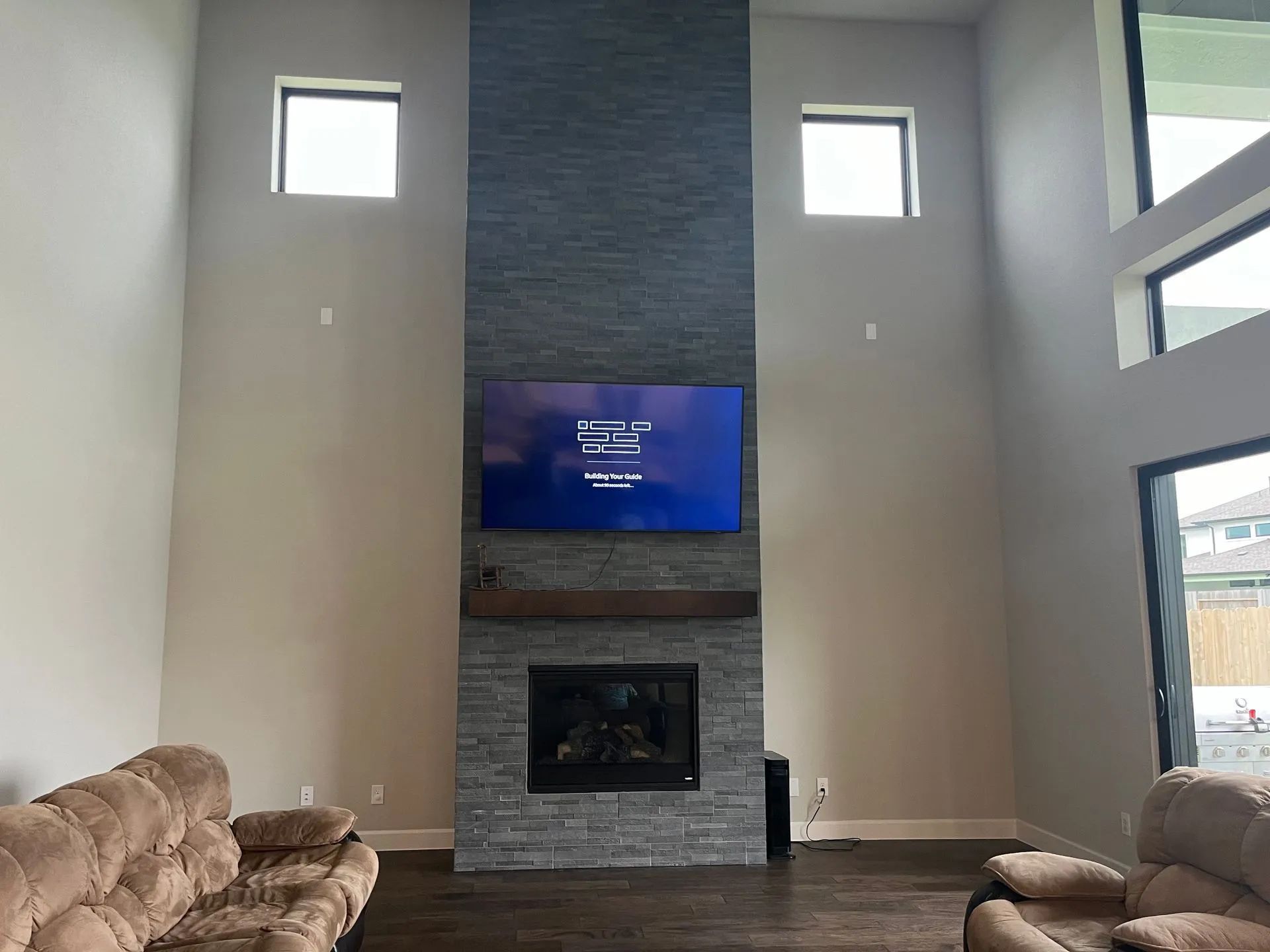
Fixed mounts hold the television parallel and close to the wall, usually within an inch or two, with no adjustment possible once it's installed. They work well in rooms with a single, dependable sightline: a couch centered on the wall, a television at or near eye level, no glare to correct for. Fixed mounts also tend to carry a higher weight rating relative to their size, since the load sits directly against the wall instead of out on an arm.
Tilting mounts add downward angle adjustment, typically somewhere between 5 and 15 degrees, and solve a specific problem: a television mounted higher than ideal eye level. That happens more often than people expect, whether the TV sits above a media console, on a bedroom wall opposite a lower bed, or in a spot dictated by an existing outlet rather than the ideal height. Tilt also helps cut glare bounced off windows and overhead lighting, which matters in a lot of Houston rooms built with large windows to bring in natural light. Angling the screen down changes the angle of reflection enough that window and ceiling light bounces past the viewer instead of straight into their eyes.
Full-motion mounts, also called articulating mounts, extend outward on a swing arm and add horizontal swivel on top of tilt, letting the screen turn toward a kitchen island, a desk, or a second seating area entirely. This is the mount type best suited to open floor plans, which describe a large share of newer Houston-area construction, where one great room can double as living room, dining space, and kitchen sightline at the same time. The tradeoff is a somewhat lower weight capacity at full extension, and a mount that sits farther off the wall even when it's pushed all the way in. That's a real cost for anyone chasing the flattest possible look, not just a footnote. A full-motion mount isn't automatically the better choice, no matter what the display model at the store shows off. Some manufacturers also sell low-profile fixed mounts that hug the wall even tighter than a standard fixed bracket, along with recessed in-wall boxes that set the mounting plate inside the wall cavity for a near-flush finish, in rooms built around the television as a design feature rather than an afterthought.
TIP: Before settling on a mount, stand in the exact spot the couch or chair will sit at different times of day and watch what the recessed lighting and window placement actually do to a blank, dark screen. A mount chosen for looks alone can turn a bright Texas afternoon into an hour of squinting at reflections, and thirty seconds standing where the seating will go tells you more than any product photo on a mount's packaging.
Matching the Mount to the Room's Actual Sightlines
Screen height matters, but so does the panel technology behind the screen, something that rarely comes up in mount-buying advice. Televisions built on VA-type LCD panels, which make up a large share of mid-range and entry-level sets, lose contrast and color accuracy as the viewing angle moves off-axis, often noticeably once someone is more than 30 to 40 degrees to one side. OLED panels hold their contrast and color much further off-axis, which is part of why a full-motion mount matters more for an LCD television watched from a wide angle than it does for an OLED set in the same spot.
Rooms with one fixed seating arrangement, a couch centered squarely on the wall, rarely need articulation at all; a well-placed fixed or tilting mount does everything that room requires. Rooms that serve double duty, an eat-in kitchen with a breakfast bar, a bonus room with a couch on one wall and a treadmill on another, a great room where the TV needs to work for both the sectional and the dining table, are exactly where a full-motion mount earns its extra reach. The layout of the room, not a general preference for more adjustability, should decide the mount type.
Wall Construction Changes What's Actually Possible
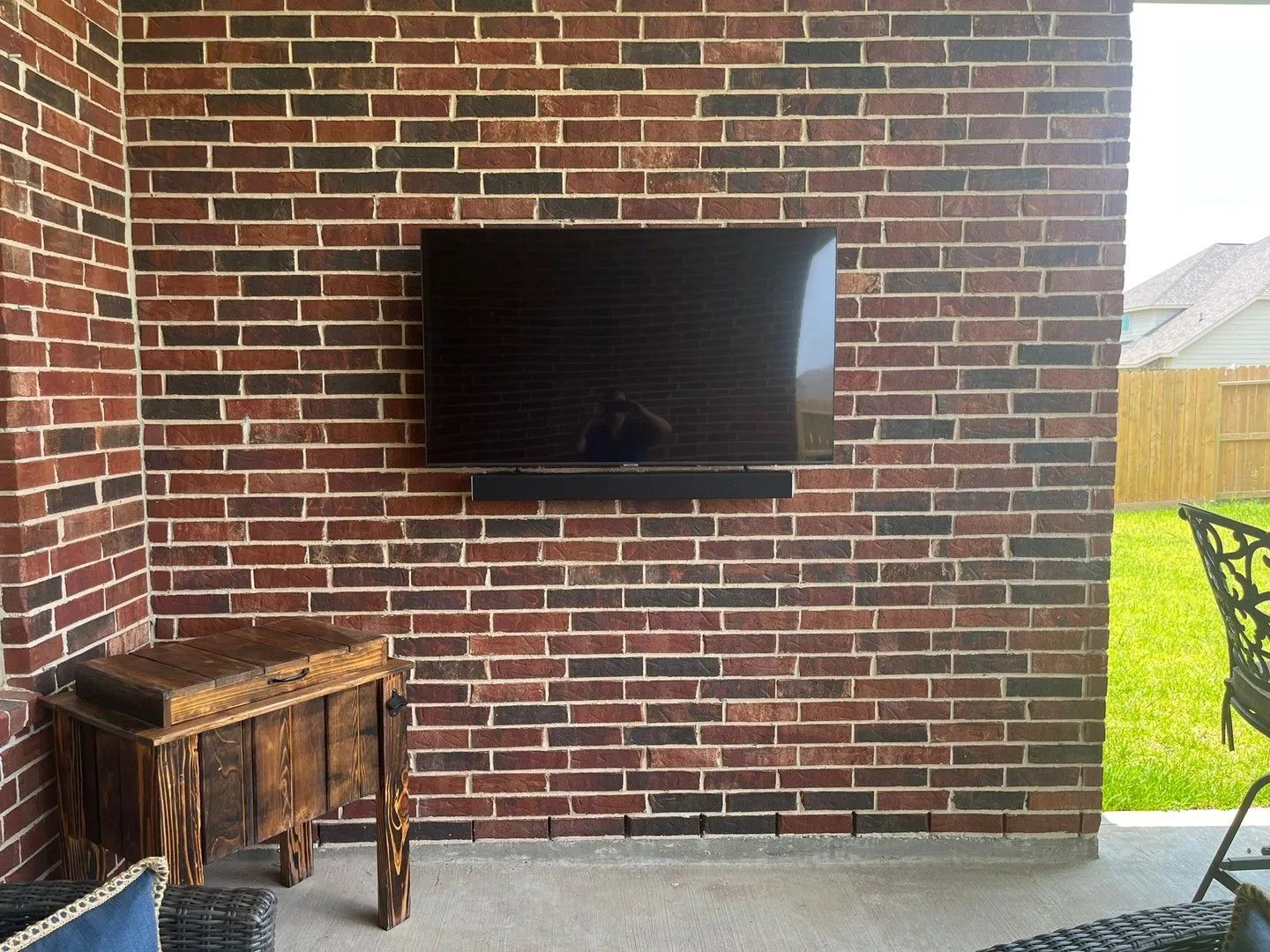
Drywall alone does not hold a television's weight. Every mount type has to anchor into the framing behind the drywall, almost always wood or metal studs spaced 16 inches on center in typical residential construction, sometimes 24 inches in certain wall types, and a mount's wall plate is drilled specifically to reach that spacing rather than chosen freehand. Homes with masonry, brick veneer, or concrete block exterior walls, which show up throughout parts of Houston and its surrounding suburbs, need an entirely different set of anchors, since there's no wood stud to catch and standard drywall hardware isn't rated to hold a television's weight against the ongoing vibration of HVAC cycling or the vibration transmitted through a slab foundation during Houston's regular thunderstorm season.
Humidity swings, another constant in this climate, can affect drywall integrity over time, particularly in rooms without solid attic or wall ventilation, which is part of why it's worth checking a mount's anchoring points periodically rather than assuming a solid installation stays solid forever. A wall that held a mount securely three summers ago isn't guaranteed to still be doing so without ever being checked.
WARNING: Mounting into drywall without catching at least two solid studs, or pushing a mount past its stated weight rating to gain a few extra inches of reach, is one of the most common ways a television ends up on the floor months after the installation looked perfectly fine on day one. If a stud finder turns up framing in an unexpected spot, or the wall's construction isn't clear, that's worth resolving before any hardware goes into the wall, not discovered afterward.
How We Match a Mount to the Room
Every installation starts the same way: walking the room, checking what's actually behind the wall with a stud finder or a closer look at masonry construction, and confirming the television's weight and VESA pattern against the manufacturer's specifications rather than guessing. From there, window placement, ceiling lighting, and how many places in the room someone might actually watch from all factor into which mount type gets recommended, since the goal is a setup that still works the way it's supposed to a year or five years later, not just on installation day.
Once a mount type is chosen, it gets installed with a weight rating that carries real margin above the television's actual weight, anchored into confirmed structural points, and checked for level and secure hold before any cable routing or final adjustments happen. Houston's climate and building mix, from newer open-concept construction to older homes with brick exteriors, means no two walls behave exactly the same way, and treating every installation as a fresh assessment rather than a repeat of the last job is what keeps a mounted television secure well past the first year.
Frequently Asked Questions
What is a VESA pattern and why does it matter when choosing a mount?
VESA is the standardized spacing of mounting holes on a TV's back, set so mounts and televisions from different brands stay compatible. Checking VESA range before style or finish avoids buying a mount that can't bolt to your TV.
Can a full-motion mount hold as much weight as a fixed mount?
Not usually. A fixed mount keeps weight close to the wall, limiting twisting force on the anchors, while a full-motion arm's reach increases that force, so manufacturers rate full-motion mounts more conservatively for the same screen size.
Is a tilting mount enough for a TV mounted above eye level?
In many cases, yes. A tilt of 10 to 15 degrees downward corrects much of the viewing-angle discomfort and glare from a high-mounted screen. Full-motion earns its bulk mainly when the room needs the screen to turn.
Do ceiling mounts make sense for a home?
Rarely, but sometimes. They show up more in commercial spaces than houses, though a room with only glass or masonry walls is where one starts to make sense, since the load hangs from overhead framing rather than a vertical wall.
How often should a mounted TV be checked for stability?
An annual check takes a few minutes and is worth doing, especially after humid summers or slight foundation settling. Confirm the hardware is snug, the television sits level, and there's no gap where the wall plate meets the wall.
Why the Right Mount Matters More Than the TV
A wall mount rarely gets credit for how well a television actually performs, but it decides the viewing angle, the glare, and whether one screen can serve a whole room or just one seat on the couch. Fixed, tilting, and full-motion mounts each solve a different problem, and the right choice comes from the room's sightlines and wall construction, not from whichever bracket happened to be closest on the shelf.
Hangman AV
brings 18
years of experience matching mount type to room layout across Houston, TX and the surrounding area, from open-concept builds to older homes with brick exteriors. That experience shapes every walkthrough, checking wall construction, lighting, and seating before any hardware goes in, so a mounted television stays secure and glare-free long after the installation day is behind it.